Physical address: 6296 Donnelly Plaza Ratkeville, Bahamas.
Painting Epoxy Garage Floors
Painting an epoxy garage floor as an alternative to a concrete floor has it’s advantages. Concrete can stain and soak up oil stains, retain marks from hot rubber tires, spread dust and look aged.
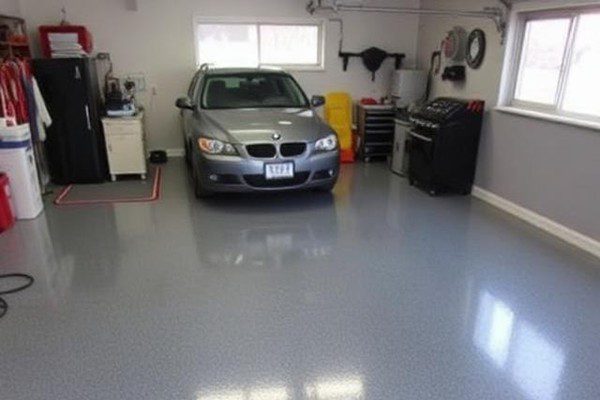
Epoxy products for coating garage floors seal the concrete with a glossy easy to clean surface that is attractive and requires minimal maintenance.
Epoxy verses regular paint for garage floors
Epoxies are very durable paints. Regular latex or even oil based paints are no match for epoxy floor coatings.
As an example hot tires from a truck that just came off the freeway would tear up regular paints. Epoxy penetrates properly prepared concrete forming a tight and durable bond that latexes or oils can’t. On average epoxy floor coatings can last 10 to 15 years with proper maintenance.
Other benefits of epoxy coatings Epoxy garage floor paint can handle chemicals like motor oil, battery acid and gas spills. Dropped tools, heavy foot traffic and hot tires are no match for epoxy coated floors.
Applying an epoxy garage floor coating will save you money and time wasted cleaning your garage floor.
Epoxy Chemistry
Regular latex based floor paint doesn’t bond to concrete garage floors like epoxy does. This lack of bonding results in cracking and loose flaky paint which is basically failure of the latex paint.
Using a urethane will get you better results but has poor bonding to concrete. Epoxy has a chemical bond with the concrete. 100% solids epoxy is the best product for a garage floor coating. Avoid Water-based epoxies too as they don’t last very long.
How to prepare and apply epoxy to a garage floor
Preparing the concrete floor to receive the epoxy is key to achieving a successful application. You want to start with a complete inspection of the concrete slab.
Any repairs or cleaning up o⁹f oil spills should take place first. Any moisture in the concrete can ruin the epoxy finish . To determine if moisture is present cover the entire floor with plastic sheeting for 24 hours. If water beads under the the sheeting moisture is present.
Any cracks need sealed with epoxy past then sanded smooth once cured. Sealed areas keep moisture out. All crumbling or chips also need to be repaired too.
To grind or not to grind that is the question
Bonding requires either acid etching the concrete floor before painting or mechanical grinding to rough up the concrete for bonding. Acid etching is fine for residential but in any commercial application grinding the surface is prefered.
If you want to mechanical grind the floor at your home go for it as the bond will last much longer. Rent a diamond grinder from a rental yard for about $50 a day.
Deep cleaning and degreasing Vac the garage thoroughly. Scrub the entire garage floor with an industrial degreaser. Let it dry then power wash. If you encountwr tough stains use a citrus cleaner. Make sure you test areas by checking if water beads on the surface. If beading repeat the cleaning steps.
Application & cure time
The cure time for epoxy for foot traffic is 24 hours. If cars or trucks will be parked the cure time is 72 hours minimum. Curing temp should be between 60 to 80 degrees with a humidity under 60%.
Follow the directions on your epoxy label for primer application if needed, dry times and maintenance.
Maintenance
For a long life to your epoxy floor regular maintenance is vital. Sweep the floor weekly and mop with a nutral cleaner monthly.
Make repairs while they are small before they spread. Clean spills and stains using a mild cleaner. Avoid bleach and abrasives.